ian

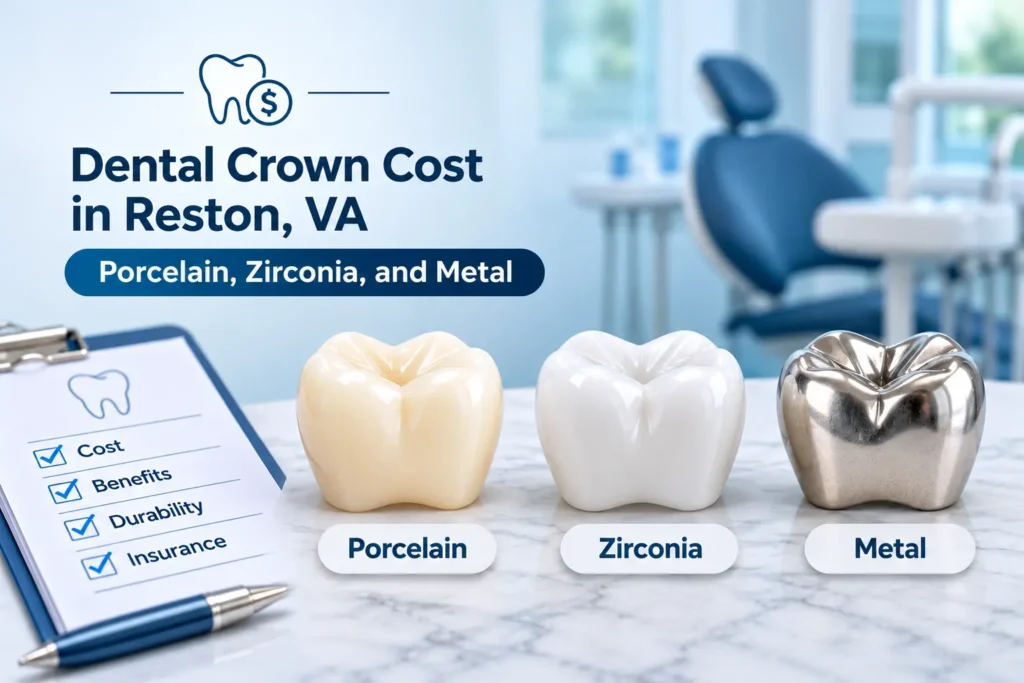
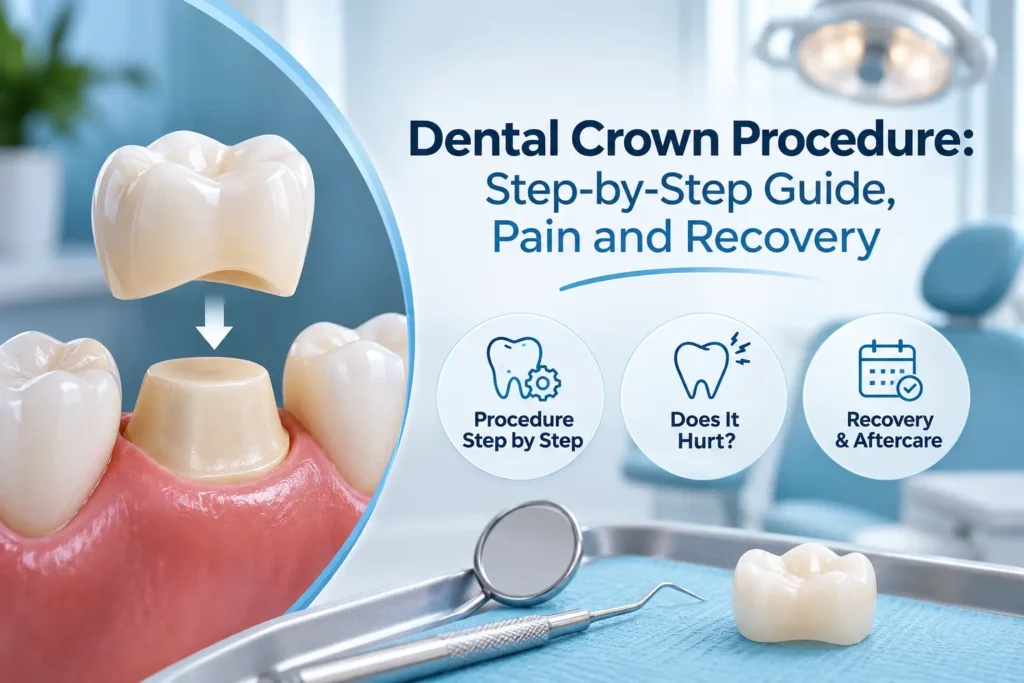
Illustration of a dental crown being placed over a prepared tooth, highlighting the dental crown procedure, pain, recovery, and aftercare.

Dental Crown Procedure: Step-by-Step Guide, Pain and Recovery

Getting a dental crown usually takes one or two appointments, depending on how it’s made. Your dentist numbs the tooth, removes damaged areas, reshapes it, and fits a custom-made covering. Most patients can return to their normal activities the same day, although mild sensitivity afterward is common. Patients considering dental crowns in Reston, VA can

Dental Crown Procedure: Step-by-Step Guide, Pain and Recovery Read More »
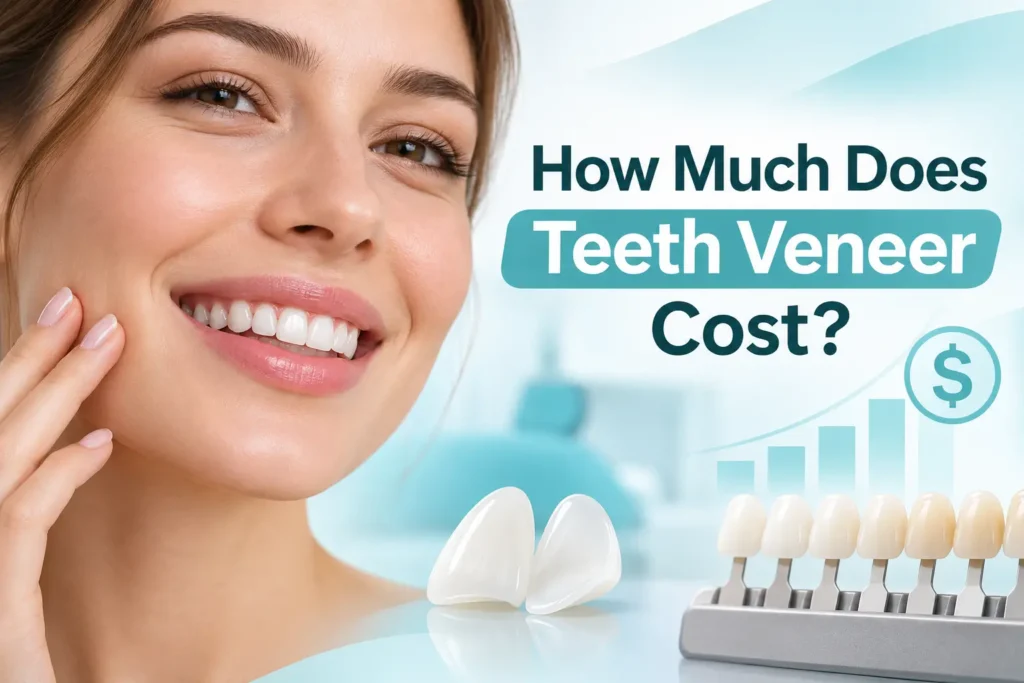
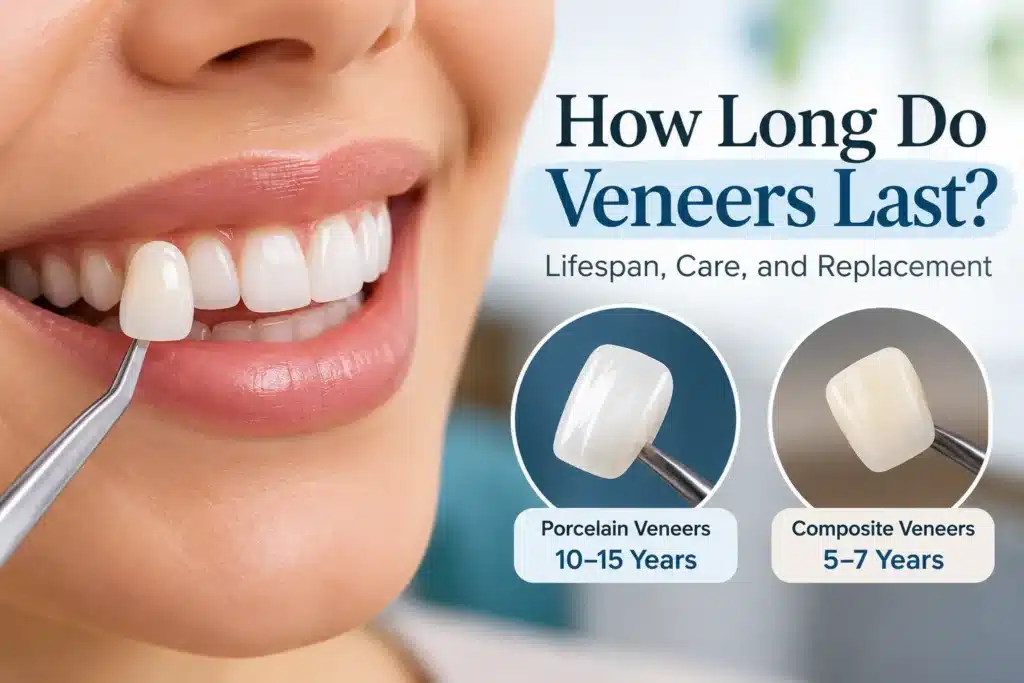
Dental illustration showing a bright smile with veneers and a comparison of porcelain veneers lasting 10–15 years and composite veneers lasting 5–7 years.

How Long Do Veneers Last? Lifespan, Care, and Replacement

Dental veneers can improve the appearance of chipped, stained, uneven, or slightly misshapen teeth. But before choosing treatment, it’s important to understand how long the results may last. How long do veneers last? Porcelain veneers typically last 10–15 years and sometimes longer with proper care. Composite veneers generally last around 5–7 years. Their actual lifespan

How Long Do Veneers Last? Lifespan, Care, and Replacement Read More »

How Long to Leave Fluoride Varnish on Teeth

How Long to Leave Fluoride Varnish on Teeth: What Your Dentist Wants You to Know

Fluoride varnish should stay on your teeth for at least 4 to 6 hours after your appointment, and many dentists recommend leaving it undisturbed until the next morning. The varnish sets within seconds of application, but the fluoride keeps absorbing into your enamel for hours afterward. Brushing or eating the wrong foods too early removes

How Long to Leave Fluoride Varnish on Teeth: What Your Dentist Wants You to Know Read More »

Heavy Tartar Removal at Home

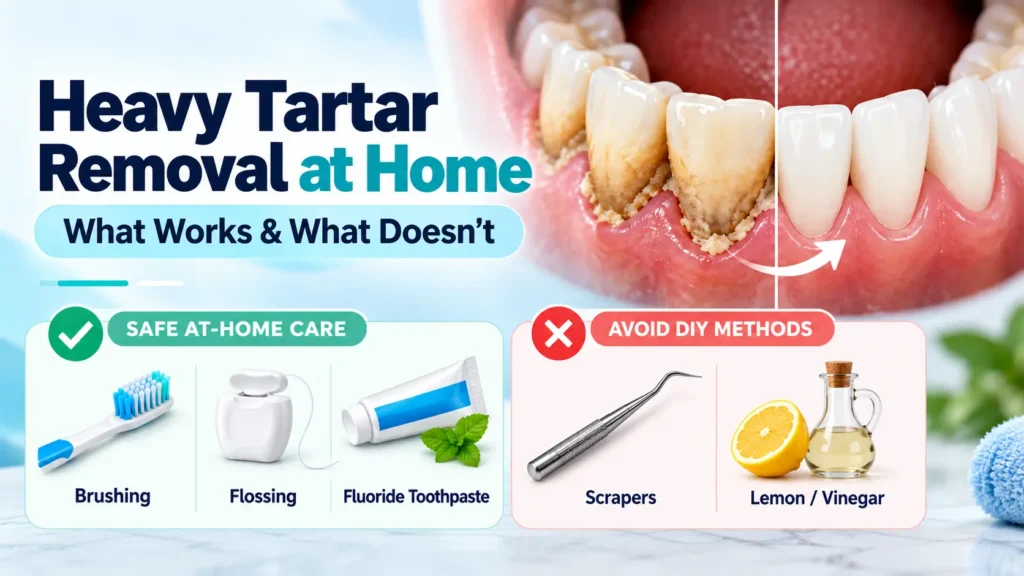
Heavy Tartar Removal at Home: What Works and What Doesn’t

If you notice a rough, yellow-brown deposit along your gumline or behind your lower front teeth, brushing harder won’t remove it. That buildup is likely tartar, a hardened form of dental plaque that requires professional cleaning. Although heavy tartar removal at home may sound convenient, household remedies cannot safely remove deposits that have already hardened

Heavy Tartar Removal at Home: What Works and What Doesn’t Read More »

Scroll to Top

Book Appointment